
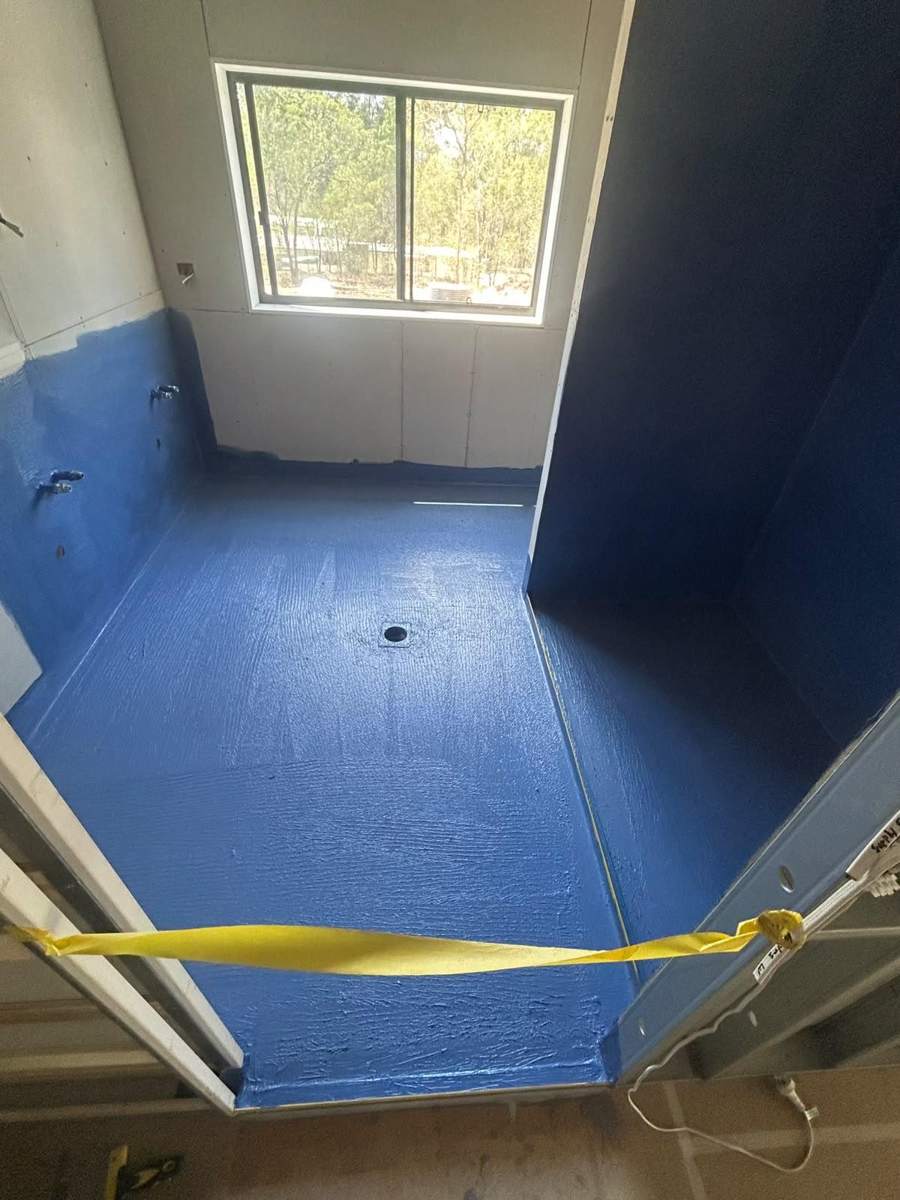
Most people choose bathroom tiles first and think about waterproofing later, if at all. It should be the other way around. Tiles are the finish you see, but the waterproofing is what protects your home from water damage. This guide explains what waterproofing does, what the Australian Standard AS 3740 covers, and how the work should be planned with the tiling.
Tiles and grout are not waterproof
A tile itself resists water, but a tiled wall or floor is made of hundreds of tiles with grout joints in between. Grout is porous and it can crack. Water gets through the joints and into whatever is behind the tiles. If nothing stops it there, the water reaches the wall framing, the floor and sometimes the room next door.
A waterproofing membrane is a continuous layer that sits under the tiles and stops that water. It is the real barrier. The tiles protect the membrane and give you a surface that is easy to clean.
What is AS 3740?
AS 3740 is the Australian Standard for waterproofing of domestic wet areas. It sets out what needs to be waterproofed in bathrooms, laundries and similar rooms, which parts of a room are treated as wet, and how details such as floor wastes, hobs and wall junctions should be handled. It is the reference the industry works to, and it is worth asking any tradesperson doing wet-area work how their waterproofing follows it.
You do not need to read the standard yourself. What matters is knowing that waterproofing is not optional, and that it is a defined job with a defined result, not just a coat of paint on the floor.
Where the membrane needs to go
In a bathroom, the most exposed area is the shower. The floor of the shower, the lower part of the walls and the walls around the shower head all need protection. Corners, where the wall meets the floor, need extra care because that is where movement and cracks happen. Penetrations such as taps, shower rails and the floor waste need to be sealed into the membrane as well.
Outside the shower, the rest of the bathroom floor is also treated as a wet area, along with the edges of the walls. Laundries are treated the same way.
The details that cause leaks
When a shower leaks, the membrane itself is rarely the first thing to fail. The failure is usually at a detail:
- Where the wall meets the floor
- Around the floor waste
- At the hob or step at the shower entry
- Around taps and other pipes that pass through the wall
This is why good waterproofing starts with the details. Corners and penetrations are treated first, with reinforcing tape or bond-breakers where needed, and then the main areas are covered.
Falls matter as much as the membrane
Water should run to the drain. The floor needs a consistent slope, called a fall, so water does not sit on the surface. If a shower floor is flat or slopes the wrong way, water pools on the tiles and the grout stays wet. A membrane can do its job, but a floor that holds water is still going to cause mould and smell.
Curing before you tile
A membrane is not ready the moment it is applied. Most products are applied in more than one coat, with a set time between coats, and then need to cure before anything goes on top. The cure time depends on the product, the thickness and the weather. In warm, humid conditions around Brisbane and the Gold Coast, this can differ from a dry day, so we follow the manufacturer's instructions rather than a fixed rule.
Tiling over a membrane that has not cured can damage it, so this is not a step to rush.
Checking the work
After the membrane has cured, it can be checked. Some jobs include a flood test, where the shower floor is filled with a small depth of water and left to see whether the level drops. Whether this suits your job is something to talk through with the person doing the work.
Why waterproofing and tiling should be planned together
When one trade waterproofs and another tiles, small details can fall between them. The tiler needs the membrane to be finished in a way that suits the tile height, the niches, the bench and the floor waste. The waterproofer needs to know where the tiles will start and finish.
Doing both from one team means those decisions are made once. It also means that if the tiler finds a problem in the wall or floor, it is fixed before the membrane goes on, not after.
Questions to ask before a bathroom job
- Is the waterproofing included in the quote?
- How are the corners, floor waste and hob treated?
- How long will the membrane be left to cure?
- Is the floor being laid to falls?
Talk to us
If you are planning a bathroom or ensuite and want to understand what the waterproofing involves, call Brisbane Wall and Floor Tiling on 0406 482 001 or send an enquiry. We are based in Daisy Hill and work across Brisbane, Logan, the Gold Coast, Ipswich and Redland Bay.
Related Services and Areas
See our Waterproofing page, or browse all services. We work in Daisy Hill, Brisbane CBD, Ipswich, Redland Bay and across the Gold Coast. Call 0406 482 001 or send an enquiry.