
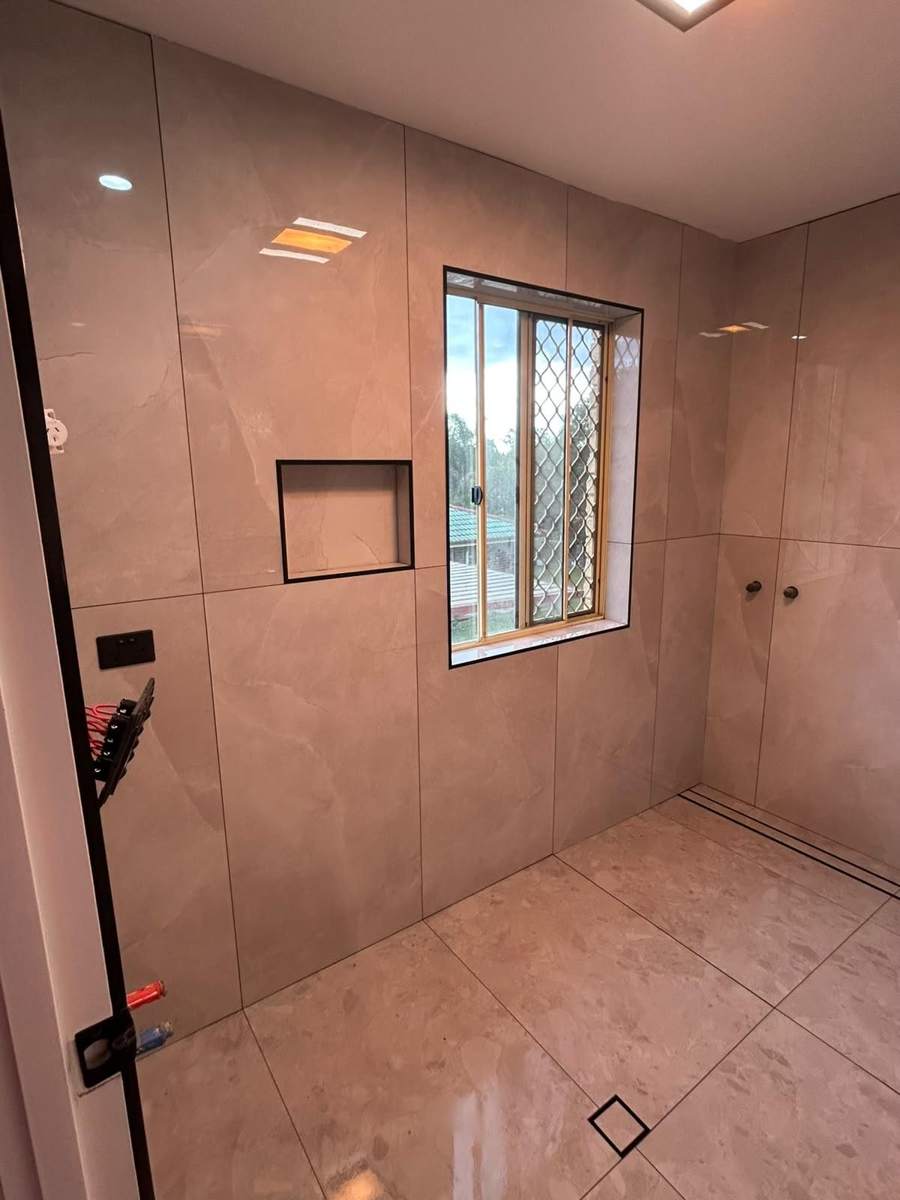
Good tiles can last for decades, but only if they are cleaned and looked after properly. The wrong cleaner can dull a surface, stain grout or damage stone. This guide covers simple habits that keep tiled floors and walls looking good.
Know what you have
Different tiles need different care.
- Glazed porcelain and ceramic are the easiest to look after. They resist stains and most cleaners.
- Unglazed porcelain is dense but the surface can hold dirt more easily, especially if it has a texture.
- Natural stone such as marble, limestone and travertine is porous and reacts to acids.
- Polished tiles show marks and streaks more than matt tiles.
If you are not sure what your tile is, ask the person who installed it, or check the supplier's care sheet.
Everyday cleaning
For most floors, regular sweeping or vacuuming removes grit that scratches the surface. Follow with a damp mop and a neutral cleaner. A neutral cleaner has no strong acid or alkali and is gentle on tiles, grout and sealant. Rinse with clean water and dry if the tile is polished, to avoid streaks.
In showers, a quick squeegee of the walls after use cuts down on soap scum and mould. Leave the exhaust fan on or open a window to clear moisture.
Cleaning grout
Grout is porous and holds dirt. For regular cleaning, a soft brush and a neutral cleaner are enough. For stubborn marks, an oxygen-based cleaner is a gentler option than strong bleach. Avoid acid-based cleaners on cement grout, because they can eat it away.
Mould in shower grout usually comes from moisture and poor ventilation. Clean it early, and improve airflow, so it does not return.
Products to avoid
- Strong acids on marble, limestone or cement grout
- Abrasive powders and steel wool, which scratch glazed and polished surfaces
- Oil-based or wax cleaners on floors, which can leave a slippery film
- Too much cleaning concentrate, which can leave residue
Always test a new product on a small hidden area first.
Sealing
Some tiles and grouts are sealed, and the sealer wears down over time. Natural stone usually needs resealing every so often, and the interval depends on the stone and how much it is used. A simple test is to put a few drops of water on the surface. If the water soaks in and darkens the stone, it may be time to reseal.
Porcelain does not usually need sealing, but the grout may benefit from a sealer in wet areas.
Flexible sealant
The flexible sealant in the corners of showers and along benchtops is different from grout. It moves with the building, but it does not last forever. Over time it can crack, shrink or grow mould. When it does, it should be removed and replaced. Do not just caulk over the top of the old material, because water can get behind it.
Check for early problems
Do a quick check every so often.
- Look for cracked or missing grout
- Look for loose or hollow-sounding tiles
- Check the sealant at corners and edges
- Check around the shower drain
Small repairs are far cheaper than fixing water damage later.
Floors with heavy traffic
Entrances and kitchens collect grit. A mat at the door helps keep dirt off the tiles. Felt pads on chair legs prevent scratches.
Outdoor tiles
Outdoor tiles benefit from a regular sweep and an occasional wash with a soft broom and water. Pressure cleaners can damage grout if used too close or at too high a pressure.
Cleaning tools that help
A good microfibre mop, a soft nylon brush for grout and a squeegee for shower walls handle most jobs. Avoid stiff wire brushes on tile or grout. For floors with textured tiles, a soft broom followed by a mop works better than a flat mop alone, because dirt gets into the texture.
When cleaning is not enough
If grout is crumbling, stained beyond cleaning or missing in places, it can be raked out and replaced. This refreshes a tiled area at a lower cost than retiling. If tiles sound hollow when tapped, or if they move underfoot, the adhesive behind them may have failed, and that needs a proper repair. Do not ignore a loose tile in a shower, because water can get behind it.
A simple yearly routine
Once a year, check your wet areas for cracks, replace tired sealant and clean the grout properly. It takes an hour or two and can prevent bigger problems.
Talk to us
If grout or sealant needs replacing, or you are unsure about a repair, call Brisbane Wall and Floor Tiling on 0406 482 001 or send an enquiry. We work across Brisbane, Logan, the Gold Coast, Ipswich and Redland Bay.
Related Services and Areas
See our Floor Tiling page, or browse all services. We work in Daisy Hill, Brisbane CBD, Ipswich, Redland Bay and across the Gold Coast. Call 0406 482 001 or send an enquiry.