Crazy-paving stone cladding uses irregular, flat stone pieces fixed to a wall so that they fit together like a puzzle. It gives a low retaining wall, a front fence or a feature wall a natural, textured look. This guide explains how it works and what to consider.
What is crazy paving?
Crazy paving is made from flat pieces of stone with irregular outlines. The pieces are fitted together with narrow joints so the pattern looks random and natural. You often see it on garden walls, entry features, fireplaces and the fronts of low walls beside driveways and footpaths.
The stone can be natural slate, quartzite or limestone, and there are also stone-look tiles made to imitate the style. Natural pieces vary in colour from piece to piece, which is a big part of the appeal.
Where it works well
- Front fences and low entry walls
- Garden retaining walls that are already built
- Feature walls beside outdoor living areas
- Planter boxes and fire pit surrounds
- Interior feature walls, such as behind a fireplace
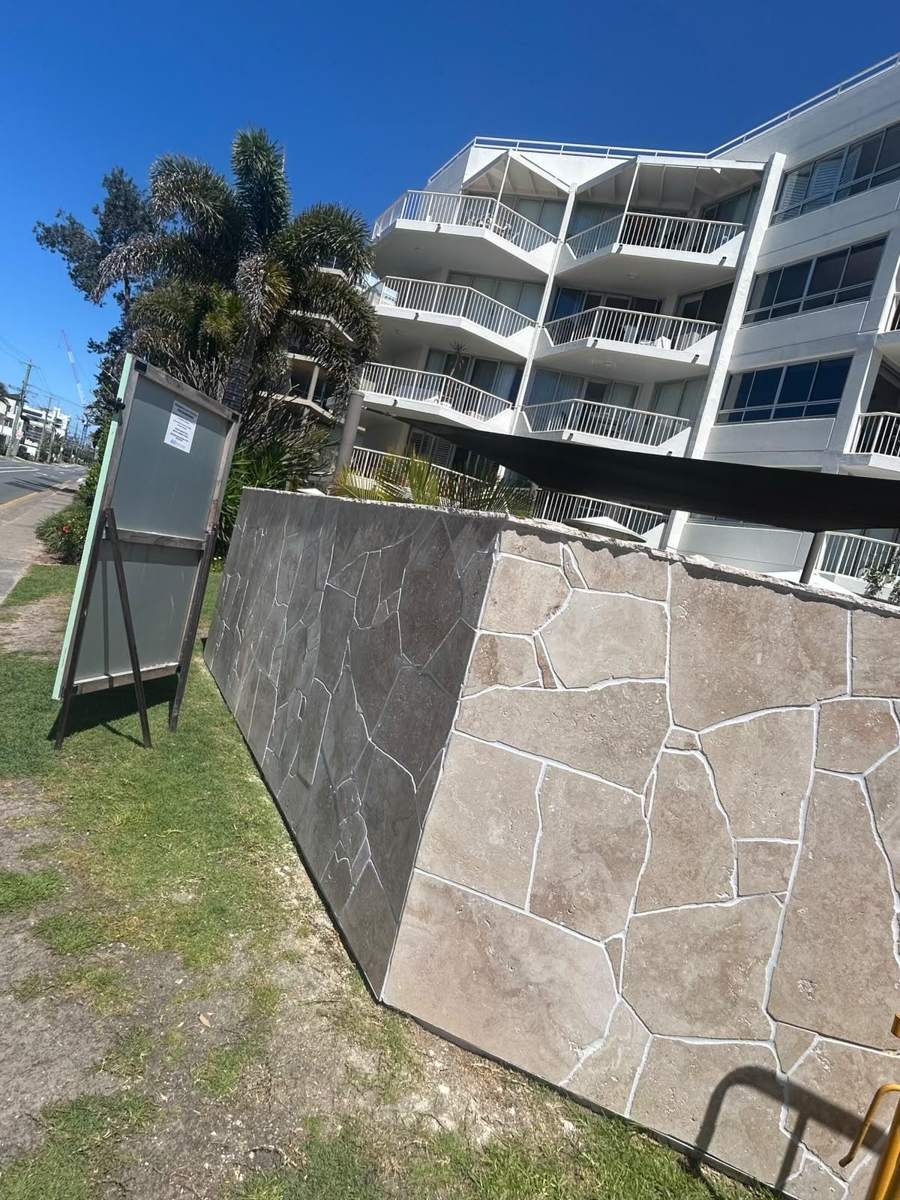
You can see some of this style in our job photos, where crazy-paving stone has been used to clad a low exterior wall.
The wall has to be right first
Cladding does not fix a poor wall. The wall underneath needs to be sound, stable and clean. Brick, block and rendered surfaces are common bases. If the wall is cracked or moving, the stone may crack or lift. If the wall holds water, such as a retaining wall, drainage behind it needs to be right, because water pushing through can push the cladding off.
For outdoor walls, the top of the wall needs to be considered as well. Water running down behind the cladding from the top is a common cause of failure, so capping or flashing matters.
How stone is fixed
Stone cladding is fixed with an adhesive that suits the material and the conditions. Outdoor use means the adhesive has to cope with heat, rain and movement. Large or heavy pieces may need extra support while the adhesive sets.
The pieces are laid out on the ground first, a process called dry-laying. This lets the tiler match shapes, balance colours and avoid putting two similar pieces next to each other. Starting at the bottom or the edge, the pieces are then fixed one by one, keeping joints even and avoiding long straight lines, which would spoil the random look.
Joints and finish
The joints between pieces can be grouted flush or left slightly recessed. Recessed joints give more shadow and make the stone stand out. Grout colour changes the look: a grey grout looks natural, while a lighter grout makes the stone look brighter.
Some stone needs sealing, especially in areas that get wet or dirty. It depends on the stone, and a sealer should be chosen to suit the material and the look you want.
Edges and corners
Corners are where cladding can look untidy. There are two choices: use special corner pieces that wrap around the edge, or cut the stone pieces to meet neatly at the corner. Either takes time and planning. The same goes for the top edge of the wall, which can finish with a cap or with a neat row of flat stone.
Thinking about weight
Stone is heavy. A large wall of cladding adds load to the wall it is on. This is another reason to confirm the wall is strong enough before starting.
Maintenance
Natural stone cladding needs little maintenance. A gentle wash with a soft brush and water removes dust and dirt. Avoid harsh acid cleaners, which can damage stone and grout. Check joints from time to time for cracks, particularly after storms.
Choosing colours and mixing pieces
Stone from one pallet can vary a lot in colour, from creamy beige to grey and rust. Mixing pieces from several packs as you lay gives a more even spread and avoids patches of one shade. It also pays to step back from the wall every so often to check the overall balance, because small colour clusters are easy to miss when you are close.
Tell your tiler about the colours of the house, the fence and the paving. Stone that picks up one or two of those colours tends to look intentional rather than added on.
Questions to ask before you start
- Is the wall suitable for cladding?
- Which stone suits the location and the look I want?
- Does the stone need sealing?
- How will the corners and top edge be finished?
Talk to us
If you are thinking about stone cladding, call Brisbane Wall and Floor Tiling on 0406 482 001 or send an enquiry. We work across Brisbane, Logan, the Gold Coast, Ipswich and Redland Bay.
Related Services and Areas
See our Stone Tiling and Cladding page, or browse all services. We work in Daisy Hill, Brisbane CBD, Ipswich, Redland Bay and across the Gold Coast. Call 0406 482 001 or send an enquiry.