
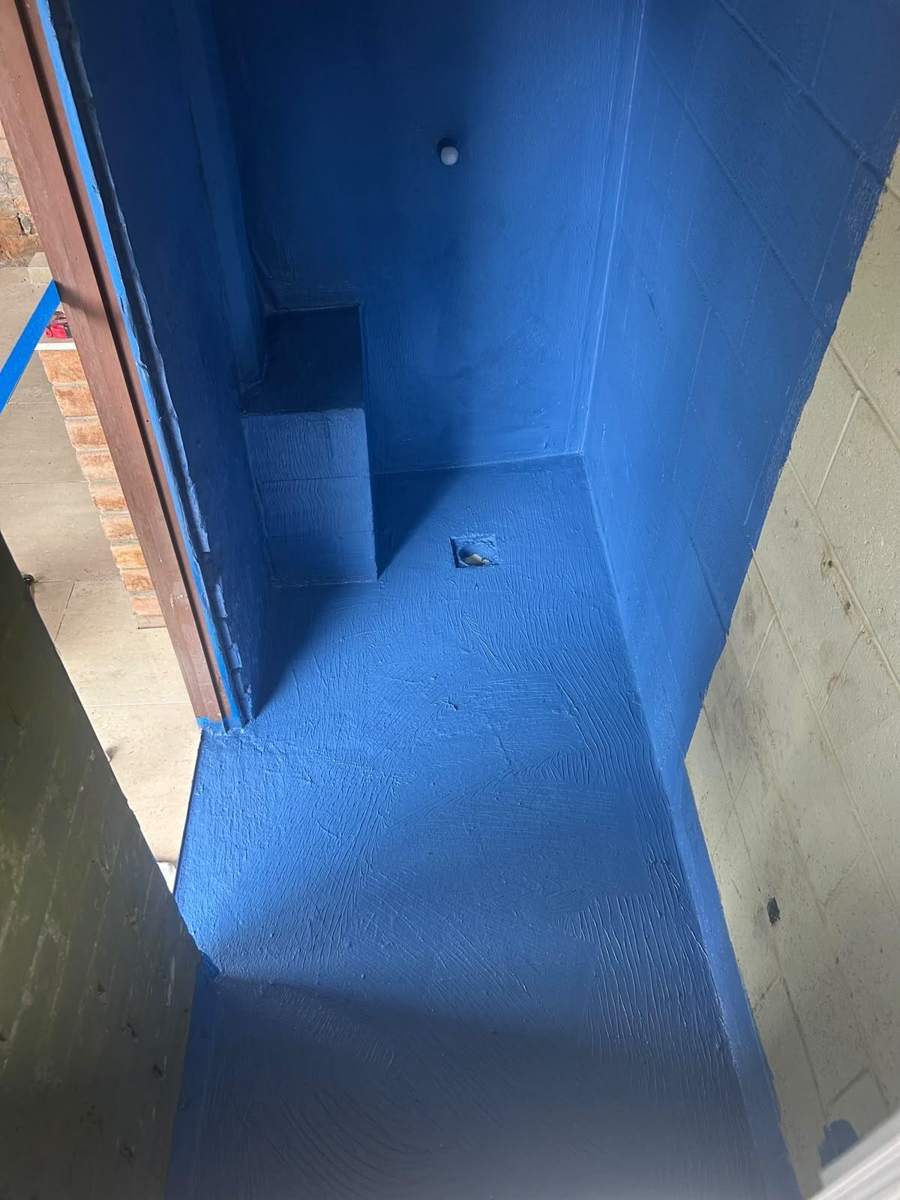
A leaking shower is one of the most common wet-area problems in a home. The tricky part is that the damage often happens out of sight, inside walls and under floors, for months before you notice. This guide covers the signs to look out for and what to do next.
Common warning signs
- Damp or stained walls or ceilings in a room beside or below the bathroom
- Peeling paint or bubbling plaster on the wall on the other side of the shower
- A musty smell that does not go away after cleaning
- Cracked grout or loose tiles in the shower or on the floor
- Mould growing along the bottom of a wall outside the shower
- Water pooling outside the shower after use
- Soft or swollen skirting boards or flooring near the bathroom
A single sign does not always mean a leak. Condensation and poor ventilation can also cause mould and damp. But if you see more than one, it is worth looking closer.
How showers start to leak
Showers usually leak at a few common points.
Corners and junctions. Where a wall meets the floor, the membrane has to bend, and these corners are where movement and cracks happen.
The floor waste. The drain has to be sealed into the membrane. If it is not, water can leak around it.
Cracked grout. Grout is not waterproof. When it cracks, water gets behind the tile.
Failed sealant. The flexible sealant in corners can shrink, crack or peel over time.
Taps and pipes. Where pipes go through the wall, the membrane has to be sealed around them.
No membrane, or a poor one. In older bathrooms, waterproofing may be missing or may no longer work.
Checking for yourself
You can do a simple check by looking closely at grout and sealant. Look for cracks, gaps or lifting. Check around the drain and where the tiles meet the wall. If you can see a gap in sealant, a repair may be quick. Do not tape up a leak and forget about it, because water may still be reaching the wall behind.
Finding the source
A leak from the shower can look like a leak from a pipe, and a pipe leak can look like a shower leak. A plumber can check pipes and fittings. A tiler or waterproofer can look at the tiles, grout, sealant and the membrane. Sometimes both are needed, because the water might come from either source.
Moisture meters, thermal cameras and flood tests are tools used to find the source. A flood test blocks the drain and fills the shower floor with a small depth of water to see if it holds. These checks are done carefully so they do not create new damage.
What a repair involves
A repair depends on the cause.
- Cracked grout or sealant. Remove and replace the failed material. This is a smaller job.
- Failed floor waste seal. Lift tiles near the drain, repair the membrane and re-tile.
- Failed membrane. The tiles are removed, the surface is prepared, a new membrane is applied and cured, and the shower is re-tiled.
In many cases the honest answer is that the shower needs to be stripped back. Tiling over a leaking shower hides the problem for a while, but it does not fix it.
Why acting early matters
Water damage grows over time. Timber framing can rot and plasterboard can break down. Mould can spread. The earlier a leak is found, the smaller the repair is likely to be.
Insurance
If water damage has already happened, it may be worth talking to your insurer. We cannot advise on a particular policy, and it is a good idea to check the wording yourself.
Preventing leaks in a new shower
- Make sure the shower is waterproofed to the right standard
- Plan the floor to fall properly to the drain
- Use flexible sealant in internal corners
- Ventilate the bathroom well
- Check grout and sealant once a year and repair small cracks quickly
Keep a record
If you notice a stain, mark its edge with a pencil and note the date. Checking after a few days shows whether it is growing, which helps whoever inspects the bathroom decide where to look. Photos taken over time are useful, too. A leak that grows only after the shower is used points to the shower. One that appears after rain points elsewhere, such as a roof or an external wall.
Talk to us
If you suspect a shower is leaking, call Brisbane Wall and Floor Tiling on 0406 482 001 or send an enquiry. We will look at the cause before recommending a fix. We work across Brisbane, Logan, the Gold Coast, Ipswich and Redland Bay.
Related Services and Areas
See our Waterproofing page, or browse all services. We work in Daisy Hill, Brisbane CBD, Ipswich, Redland Bay and across the Gold Coast. Call 0406 482 001 or send an enquiry.