
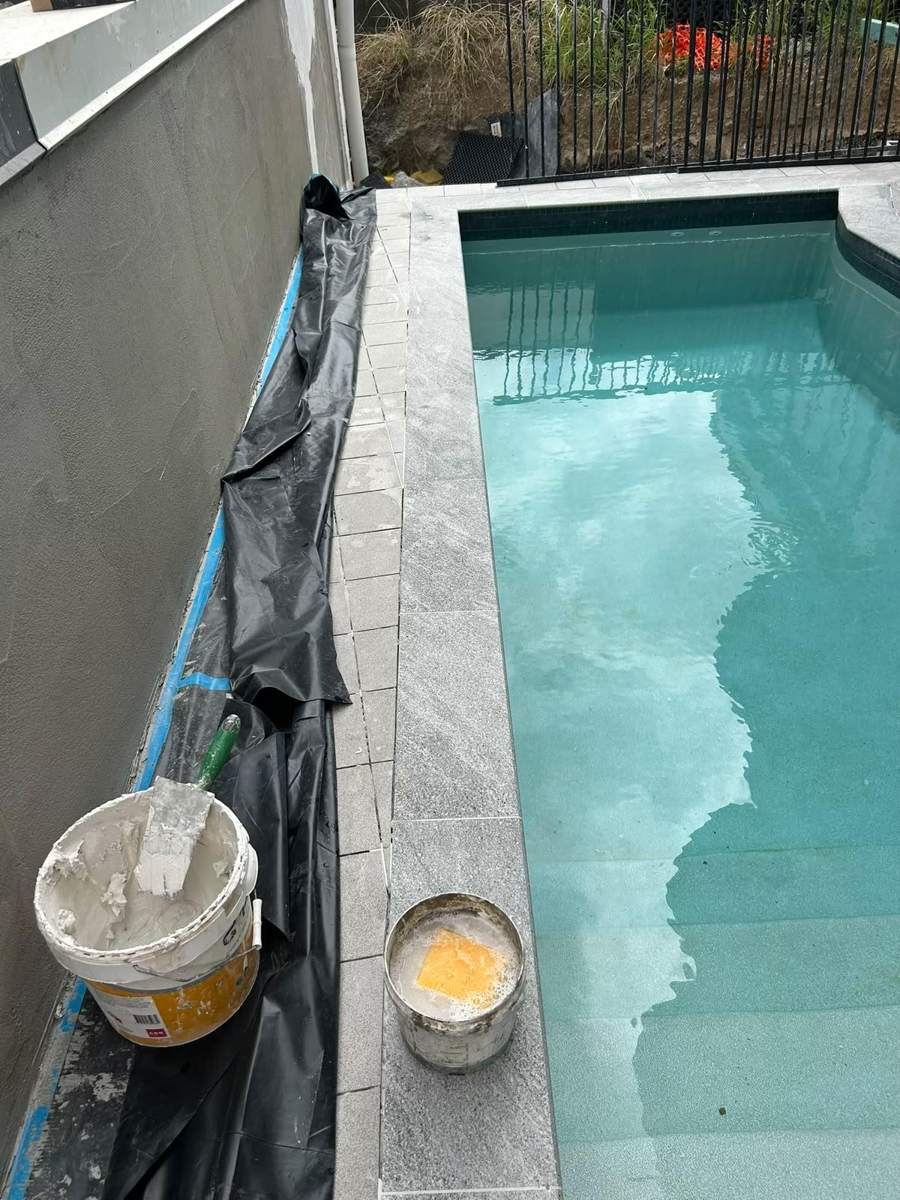
A tiled pool surround changes how a backyard looks and feels. It also takes more punishment than almost any other tiled area. Sun, chlorine, wet feet and heavy foot traffic all test the tiles. This guide covers the main things to think about before tiling around a pool.
Start with slip resistance
Wet tiles can be slippery, and pool surrounds are wet most of the time. Tiles for outdoor wet areas should have a slip rating suited to the use. In Australia, slip resistance of pedestrian surfaces is classified under AS 4586. Ask the supplier for the rating of any tile you are considering and choose one that suits a barefoot, wet area.
Polished tiles are usually a poor choice for pool decks. Matt, textured or honed finishes give better grip and are less glary in the sun.
Heat
A dark tile can get very hot in full sun and be uncomfortable to walk on barefoot. Lighter colours stay cooler. Natural stone and some textured porcelain tiles tend to feel more comfortable underfoot than dark glossy tiles. Look at where the sun falls on your pool area before choosing.
Coping
The coping is the edge that runs around the top of the pool wall. It is usually a stone or a tile with a rounded or square edge that overhangs the water. It can be laid in a single row or a double row. Coping has to be fixed carefully, because it sits next to the water and is walked on constantly.
The joint between the coping and the pool shell, and between the coping and the surrounding paving, is usually filled with a flexible sealant, not rigid grout, so it can move without cracking.
Falls and drainage
The surface around a pool should slope slightly away from the water, so rainwater and splash drain away from the pool and from the house. Without proper falls, water sits on the tiles and finds its way to places it should not go. Planning the falls is part of the base preparation and has to be done before the tiles are laid.
The base
A tiled pool surround needs a sound, stable base. This might be a concrete slab or a screed. Tiles on a weak or moving base will crack. If the surround is over a concrete slab, movement joints will be needed at set intervals so the tiles can expand and contract with the heat.
Adhesive and grout
Outdoor tiles need an adhesive that suits the base and the tile, and that copes with heat and moisture. Grout in pool areas is exposed to chlorine, salt and sun. Grout that suits the conditions and is applied properly will last better. Some grouts resist staining better than others, and it helps to ask about this.
Sealing
Some natural stones and tiles need sealing to resist staining. Sealing is not needed for all porcelain, which is dense and does not absorb much water. Check what your chosen material needs.
Steps and pool edges
If your pool has steps, tiled edges or a raised spa, these need extra attention. Edges should be easy to see, so contrasting edge tiles are often used. Step treads should have good grip. You can see tiled outdoor steps in some of our job photos, where the tile edges were carefully set so each tread is even.
Safety
Pool areas have rules in Queensland, including fencing requirements. These rules sit with the pool owner and the pool certifier, and tiling does not change them. If you are renovating around a pool, talk to your builder or certifier about what applies to your property.
Maintenance
Rinse the surface regularly and clean with a product that suits the tile. Avoid strong acid cleaners on stone and grout. Check the sealant joints every so often and replace any that are cracked or lifting.
Timing and weather
Outdoor tiling depends on the weather. Rain can wash adhesive out of joints and extreme heat can make adhesive dry too quickly. In South East Queensland, summer storms and humidity affect planning, so jobs are scheduled around the forecast where possible. Grout and sealant also need dry time before the surface is used or filled with water, and your tiler can tell you how long that is for the products on your job.
Planning around the pool shell
If the pool is brand new, the pool shell, plumbing and fencing need to be finished before the final tiles are laid. If the pool is old, check the condition of the existing edges and the surrounding slab before choosing the new surface.
Questions to ask before a pool tiling job
- What is the slip rating of the tile?
- How will the falls be set?
- What coping will be used and how will it be fixed?
- Where will movement joints go?
- Does the stone or tile need sealing?
Talk to us
If you are planning a pool surround or outdoor tiling, call Brisbane Wall and Floor Tiling on 0406 482 001 or send an enquiry. We work across Brisbane, Logan, the Gold Coast, Ipswich and Redland Bay.
Related Services and Areas
See our Outdoor and Pool Tiling page, or browse all services. We work in Daisy Hill, Brisbane CBD, Ipswich, Redland Bay and across the Gold Coast. Call 0406 482 001 or send an enquiry.